
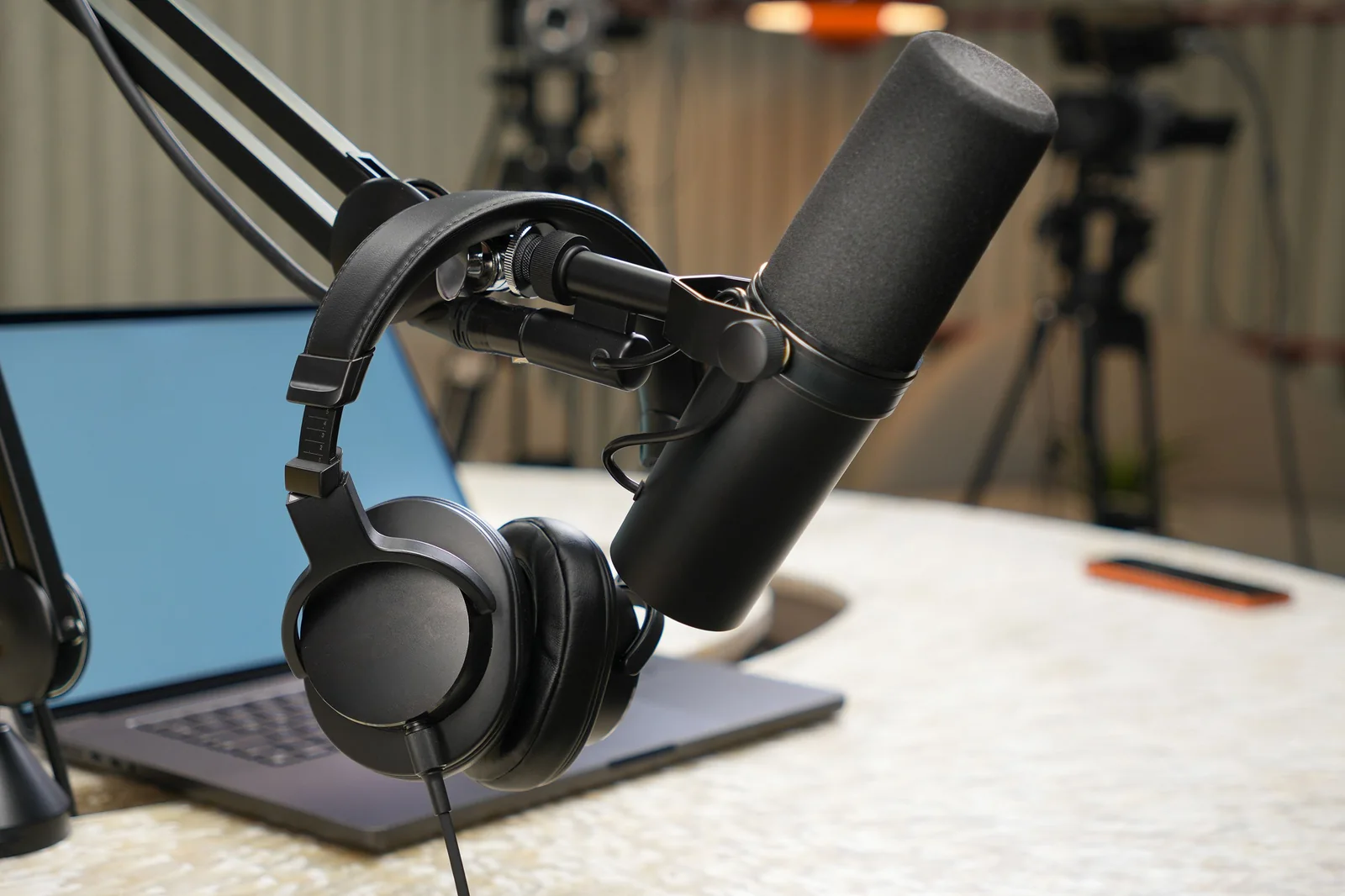
A podcast archive can become the raw material for a strong nonfiction book, but transcripts are not chapters. The most effective workflow is to choose one thesis, extract only the episodes that support it, separate host ideas from guest contributions, and rewrite the material for readers rather than listeners.
Nellie can help generate and structure a complete nonfiction manuscript from a detailed book brief. Before you reach that stage, however, you need to turn the archive into a clean, rights-aware source collection. Feeding every transcript into a project without selection usually produces repetition, weak transitions, and competing arguments.
This is Nellie’s own blog, so the product guidance here is naturally written from that perspective. The workflow is based on practical editorial criteria: thesis fit, source quality, chapter coherence, rights clearance, factual durability, and reading pace. It is not a hands-on comparison with every transcript or book-writing tool, and the worked example below is invented rather than the result of an actual generation.
Start with the book’s thesis, not the episode list#
A podcast is organized around recurrence. A book needs progression.
Your archive might include 80 conversations about entrepreneurship, but “lessons from entrepreneurs” is too broad to guide a manuscript. A more useful thesis would be:
Small service businesses grow more reliably when they simplify their offer, document delivery, and build a repeatable referral system.
That sentence gives you a selection test. An episode about pricing a consulting package may belong. A conversation about venture capital probably does not, even if it performed well as a podcast.
Create an episode inventory with these fields:
- Episode title and date
- Host or guest format
- Main argument
- Useful stories, examples, or quotations
- Claims requiring current verification
- Guest-permission status
- Possible chapter theme
- Decision: keep, mine for a small section, or exclude
Do not treat downloads or audience popularity as the main selection criterion. A popular episode can still distract from the book’s argument. Select for usefulness to the reader and contribution to the thesis.
If your archive contains published articles as well as episodes, use the companion guide to turning a blog archive into a book. The same thesis-first principle applies, but spoken material needs more substantial rewriting.
Clean transcripts without erasing meaning#
Automated transcripts commonly contain misheard names, false sentence breaks, repeated phrases, and missing speaker labels. Spoken conversation also contains material that is natural in audio but tiring on the page:
- “Um,” “you know,” and similar filler
- Repeated setup after an ad break
- Host recaps of points the guest just made
- Tangents and conversational courtesies
- References such as “as we said earlier”
- Audio-only cues such as “look at the chart on screen”
Clean in two passes. First, correct transcription errors and identify speakers without changing meaning. Second, mark passages as usable evidence, anecdote, quotation, host commentary, or discardable conversation.
Keep the original transcript unchanged in a separate folder. Your cleaned copy is an editorial derivative, not a replacement for the source. Add timestamps to passages you may quote so you can check them against the recording later.
Separate host narration from guest material#
A book assembled from interviews can accidentally shift authority. A guest’s experience may be rewritten as if it were the host’s conclusion, while a host’s interpretation may appear to be a direct quotation.
Use simple labels in your source notes:
- HOST: Original argument, explanation, or transition
- GUEST: Direct quotation or attributable idea
- PARAPHRASE: Guest idea restated in new wording
- SOURCE NEEDED: Claim requiring independent support
- CONTEXT: Date, industry, jurisdiction, or circumstances limiting the claim
Decide what kind of book you are making. It might be a host-led guide that uses interviews as supporting material, an anthology that preserves distinct guest voices, or a reported book built from interviews and outside research. Each form requires different transitions and attribution.
For a host-led guide, draft the host’s argument first. Insert guest examples only where they clarify or challenge that argument. This prevents the manuscript from reading like a sequence of lightly edited Q&A sessions.
Cluster episodes into chapter-sized themes#
Once the transcripts are tagged, group useful segments by reader problem rather than recording date. One chapter might draw from six episodes, while another relies mainly on one deep interview plus independent research.
A practical chapter map includes:
- The reader’s question
- The chapter’s answer
- Supporting episodes and sources
- One or two concrete examples
- A complication or counterpoint
- An action the reader can take
- The transition to the next chapter
Aim for one main job per chapter. “Marketing, hiring, leadership, and finance” is not a chapter theme. “How to make referrals predictable” is.
Look for repeated anecdotes and advice. Podcast hosts often revisit foundational ideas because listeners enter at different episodes. Book readers encounter chapters in sequence, so explain a core concept fully once and refer back to it briefly later.
For claims, quotations, and source tracking, follow the more detailed source-first nonfiction workflow. It shows how to maintain an evidence ledger rather than relying on a generated draft to distinguish established facts from illustrative material.
Rewrite for book pacing instead of polishing the transcript#
Short spoken segments often need reconstruction, not cosmetic editing.
A podcast exchange may work like this:
Host: So the real problem was the offer?
Guest: Yeah, totally. We had, like, nine services, and people didn’t know what to buy.
Host: Right. Too much choice.
A book version could become:
The company’s problem was not a lack of expertise. It was an excess of choices. Customers had to compare nine services before they could decide what to buy, so the team reduced the offer to a smaller set of clearly defined packages.
The revision removes conversational scaffolding and creates narrative movement. If the detail came from a guest, attribution still matters. You might introduce the example with the guest’s name and role, subject to permission and verification.
Use direct quotations selectively. Preserve wording when the phrasing itself is memorable or revealing. Paraphrase when the underlying idea matters more than the exact sentence. Never place polished wording inside quotation marks unless it accurately reflects what the person said.
Worked example: an invented interview podcast#
This example is hypothetical. No book was generated, and it does not describe a customer project.
Suppose The Practical Studio is an interview podcast for independent creative agencies. Its archive contains 54 episodes about pricing, client management, hiring, productivity, and creative careers.
The proposed book thesis is:
A small agency becomes more resilient when it standardizes the work clients cannot see while preserving flexibility in the creative work they can.
The team excludes broad career interviews and episodes focused on large advertising firms. It keeps 16 episodes and clusters them into six chapters:
- Define a narrow, understandable offer
- Diagnose client needs before proposing work
- Standardize onboarding and approvals
- Price for scope and uncertainty
- Build a small network of specialist collaborators
- Review projects and improve the operating system
An interview about a delayed website project contributes one short case study to the approvals chapter. A pricing roundtable supplies contrasting approaches rather than a single rule. Host introductions from several episodes become the basis of a new chapter opening, but they are rewritten to remove repeated show summaries.
The team then prepares a book brief for Nellie containing the thesis, intended reader, chapter map, tone, approved examples, attribution rules, claims requiring verification, and instructions not to invent guest quotations or facts. Nellie supports full-length nonfiction generation, but generated text still requires review before sharing or publication, as its FAQ explains.
Check guest permission and time-sensitive claims#
Permission to publish an episode does not automatically settle every question about republishing a guest’s contribution in a commercial book. Agreements and applicable law vary, so obtain legal advice when rights are unclear.
Use this checklist before drafting around guest material:
- Locate the signed guest release or participation agreement.
- Confirm whether it covers editing, transcripts, derivative works, books, promotion, and commercial reuse.
- Check permission to use the guest’s name, biography, image, and direct quotations.
- Record any approval, attribution, confidentiality, or compensation terms.
- Ask for additional written permission when the original agreement does not clearly cover the book.
- Avoid implying that a guest endorses the finished book unless that has been agreed.
- Remove confidential, private, or off-the-record material.
- Keep releases, correspondence, transcripts, and final quotation checks together.
Written guest releases can clarify recording, editing, distribution, repurposing, and publicity rights, although requirements differ by jurisdiction and situation. This overview of podcast guest releases outlines common terms, but it is not a substitute for advice tailored to your project.
Also flag every time-sensitive statement:
- Prices and market figures
- Laws, regulations, and platform policies
- Job titles and company details
- Product features
- “Currently,” “recently,” or “this year” references
- Medical, financial, or legal guidance
- Predictions presented as settled outcomes
Verify each claim against a current primary or authoritative source. Add an “accurate as of” date where useful. If a claim cannot be supported, qualify it, replace it, or remove it.
When starting fresh is better than recycling#
Reuse the archive when it contains a clear recurring argument, distinctive interviews, and examples that remain relevant. Start fresh when the thesis has changed, permissions are uncertain, transcripts are poor, or most episodes depend on outdated news.
A new draft is also better when the archive is primarily entertainment. Friendly banter, topical reactions, and guest chemistry may make excellent audio without supplying the sustained explanation a book requires.
The best approach is often hybrid: write a new structure and new host narration, then use selected interview material as evidence and illustration. That preserves the archive’s strongest insights without forcing the book to imitate the show.
Build the brief before generating the manuscript#
Your next step is not to import every transcript. Write the thesis, inventory ten promising episodes, and create a six-to-ten-chapter map. Then prepare a concise source packet for each chapter, including attribution and verification notes.
Use that material to give Nellie a specific nonfiction brief. After generation, review the manuscript chapter by chapter for structure, repetition, quotation accuracy, permissions, and factual support. A podcast archive gives you a head start, but editorial selection is what turns it into a book.